


For most hotel leadership teams, marketing lives firmly on the cost side of the ledger. It looks like a series of short-term expenses: seasonal campaigns, promotional pushes, and localized media spend designed to patch immediate occupancy gaps. When budgets fall short, they are the first expenses to get cut.
It is time to change that perspective.
When you shift from a campaign mindset to an infrastructure mindset, the entire financial equation changes. Marketing ceases to be an expense line item and becomes an investment: a high-value revenue asset that builds long-term equity, reduces reliance on expensive OTAs, and directly drives up the valuation of your asset.
At Cogwheel, we aren’t just running campaigns. We are building your hotel’s digital revenue infrastructure.
The Shift: Campaigns vs. Infrastructure
Traditional hotel marketing focuses almost exclusively on isolated efforts: revenue management builds a seasonal offer, and marketing spends money to promote it. Then it’s on to the next short-term need while the asset manager wonders if the campaign even made a difference.
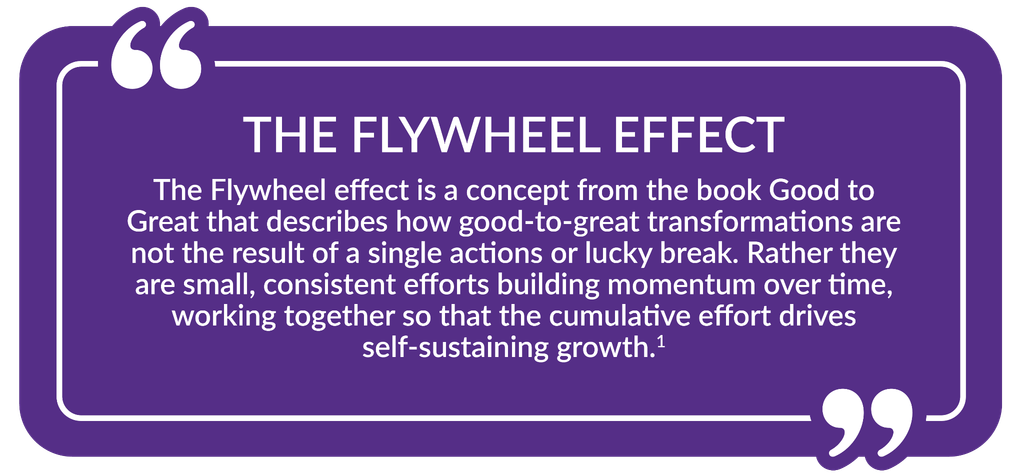
Revenue infrastructure, by contrast, creates an integrated, permanent ecosystem. It connects every touchpoint of the guest journey by a path designed to capture, convert, and retain demand over time. Instead of reacting to low occupancy with emergency ad spend, a commercial strategy team collaborates within this infrastructure; continuously tweaking tactics, updating messaging, and shifting resources to support business needs as they evolve. These efforts also compound over time in a flywheel effect.¹
Planes, Trains, and Search Engines: How Digital Highways Deliver Direct Bookings
To understand why this distinction matters to the home office, consider how real-world economies thrive.
Think of the most economically viable cities in modern history. What do they have in common? They support diverse industries, accommodate high volumes of people, and—most importantly—they have built incredible physical infrastructure to bring people in and move them around.
In the digital landscape, your hotel website puts you on the map, and your booking engine is the destination.
When you think of your marketing as revenue infrastructure, networks of “planes, trains, and automobiles” become “display ads, social media, and search engines” designed to bring guests directly into your hotel:
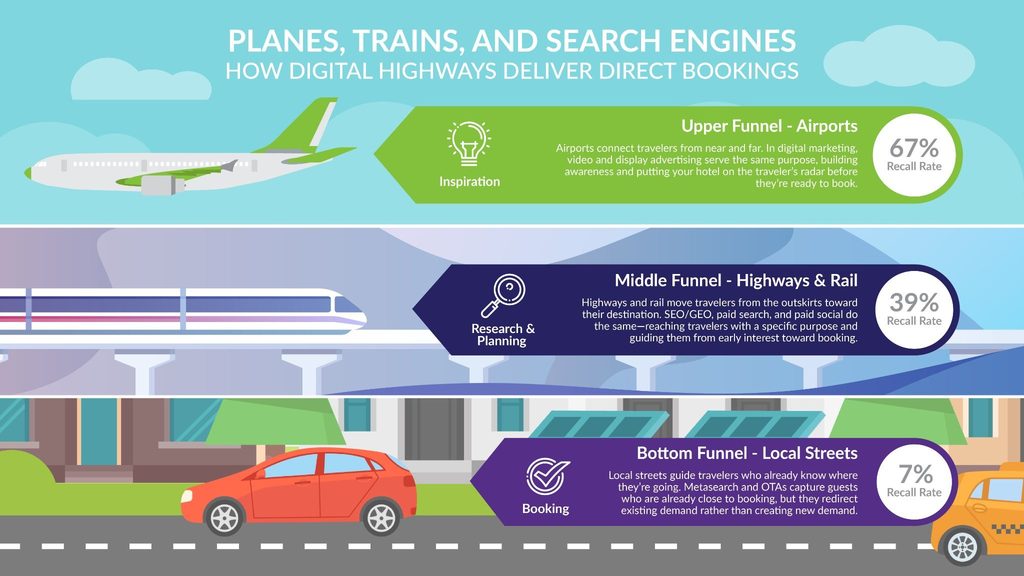
Upper Funnel (Inspiration) – Airports
Airports bring in the highest volume of people from all over the world, near and far.
In digital infrastructure, this is your video and display advertising. These channels generate broad awareness and fill your digital pathways with warm leads. Some of these travelers are close to making a decision; others are further away. But their journey has to start somewhere, and they cannot choose your hotel if they don’t know you exist.
Much like airports, this is the most effective way to place travelers on the path to your property. This stage offers the greatest opportunity to actually influence user behavior and ad recall rate is at its highest point of 67%².
Middle Funnel (Research & Planning) – Highways & Light Rails
Highways and trains funnel people who are already close to a destination right to it. It’s the light-rail from the airport to the heart of downtown. It’s the ferry to your favorite island. It’s the highway from the outskirts to the city-center.
This is your SEO/GEO, paid search, and paid social. These users are close to booking, but aren’t quite there yet. They are traveling for a specific purpose, and your messaging here must address why they are coming and why your hotel is the right choice.
This is how you move users through the last few miles of their journey, staying top-of-mind and converting early interest into solid intent. Ad recall drops to 39%² because users are already considering specific options and the window to influence their behavior is closing.
Bottom Funnel (Booking) – The Local Streets
Local streets are for folks who’re already in town. They know where they’re heading, they just need directions.
Enter metasearch and OTAs. Bidding on metasearch is like paying for a neon sign pointing at your front door when the guest is already on your sidewalk (our POV on metasearch). OTAs are even pricier—the digital equivalent of paying an expensive cab fare to drop a lost guest in your driveway when you have vacant rooms. Both can be useful tactics for specific needs, but every hotel would prefer to not have to rely on them.
This is the direct booking trap: these pathways aren’t creating new demand; they’re just redirecting people who got slightly lost on the way to your booking engine.
This is where most hotels dump the vast majority of their budget, making these channels crowded, costly, and cap your growth potential. Worse, you are spending top dollar on an audience that has already made up its mind and whose ad recall drops to a mere 7%².
The Direct Booking Trap: Why You’re Spending Budget in the Wrong Place
Hotels spend their budgets on bottom funnel, book-direct tactics because it’s easy to show a good ROAS. It’s time to move beyond ROI when communicating the value of marketing as revenue infrastructure because it can’t convey the true influence of upper-funnel channels or get adequate attribution for branded hotels.
Judging an upper- or middle-funnel campaign solely on ROAS is akin to saying that an airport didn’t sell enough subway fares, even though we can see the influx of riders getting on the subway at the stop closest to the airport.
To evaluate performance accurately, leadership must view the revenue infrastructure as a whole system rather than judging each as an isolated segment. When the pathways are built correctly, overall direct booking volume goes up, acquisition costs go down, and market share increases.
You can have the perfect rate strategy and a booking engine that converts 100% of the users who enter it. But if only three people find it, you only get three bookings. If 3,000 people reach it, you get 3,000 bookings. As your infrastructure reaches higher into the funnel, its ability to drive volume and influence behavior increases and compounds; your marketing gains momentum. This is the flywheel effect in action.
Why the Booking Window Is Ruining Your Commercial Strategy
The fundamental flaw in most commercial strategy conversations is an over-emphasis on the booking window. While well-meaning teams cling to this timeframe as proof they understand their target guest, they miss their opportunity to influence behavior and increase their pipeline.
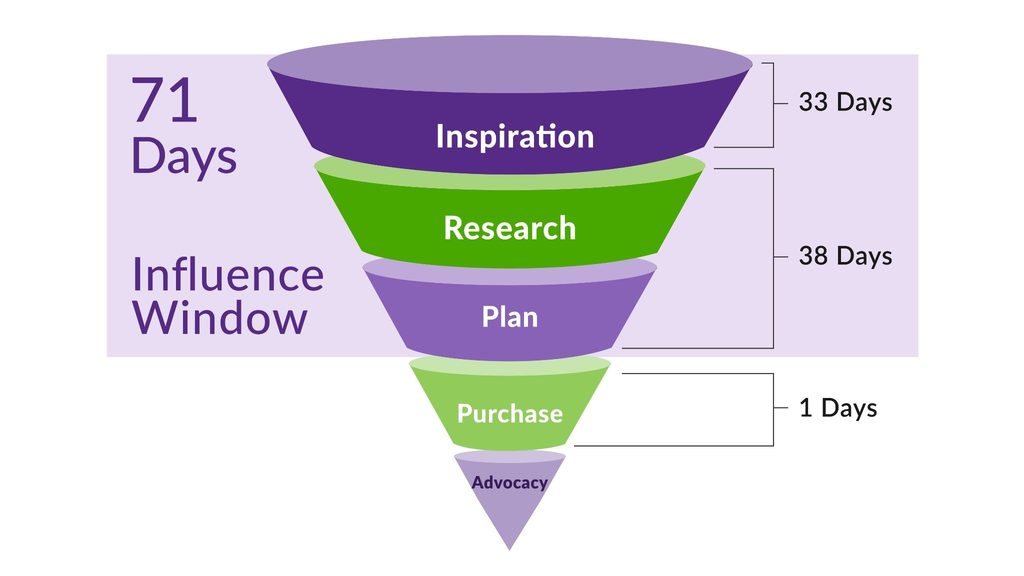
According to Expedia’s Path-to-Purchase data, travelers spend an average of 71 days inspiring, researching, and planning their trip—and only 1 day actually making the booking².
The challenge is getting your commercial strategy team to zoom-out and have conversations further out. When they bring up their booking window, add 71 days to it (and a few more to turnaround deliverables). How far out are we talking now? 3 months? 4 months? That’s the timeframe when we can have the greatest impact. That’s why we need to focus on the influence window and not the booking window.
By building infrastructure across all levels of the funnel, you influence a massive pool of potential guests early and often. By the time that single booking day arrives, they’ve already been inspired, done their research, and planned their travel; with your hotel in mind.
Are you running short-term campaigns or building an influential asset that grows over time?
Sources:
Collins, J. (n.d.). The flywheel effect. Jim Collins. https://www.jimcollins.com/concepts/the-flywheel.html
Expedia Group. (2023). The path to purchase: Uncovering how travelers plan and book online. https://partner.expediagroup.com/en-us/resources/research-insights/path-to-purchase